
Construction schedules are more than dates on a chart. They are the backbone of project execution and owner advocacy. When schedules are weak, costs rise, risk increases, and confidence erodes among stakeholders. When schedules are strong, owners maintain control, teams stay aligned, and projects achieve value-driven outcomes that support community growth and long-term impact.
For public agencies, school districts, municipalities, and private developers in South Texas, scheduling challenges are compounded by regional permitting complexities, seasonal weather patterns, labor market dynamics, and multi-agency coordination. The right approach to scheduling protects capital, aligns stakeholders, and enhances project efficiency.
Below, we explore five of the most common construction scheduling mistakes, practical solutions tailored for the South Texas environment, and how Brownstone Consultants brings disciplined, value-focused scheduling and owner representation to every project.
Common Scheduling Risks and Owner-Focused Solutions
| Scheduling Risk | Owner Exposure | Value-Driven Solution |
| Unrealistic Timelines | Cost overruns and delays | Data-validated planning |
| Poor Resource Allocation | Inefficiency and safety risk | Resource-loaded schedules |
| Ignored Weather/Permitting | Lost time and credibility | Regional planning and float |
| Lack of Contingency | Claims and acceleration | Risk-based buffers |
| Inadequate Monitoring | Late issue detection | Active schedule controls |
1. Unrealistic Timelines That Are Not Grounded in Reality

Project schedules are often built around political milestones, funding deadlines, or bid competitiveness instead of real-world conditions. These optimistic timelines assume perfect permitting, procurement, labor availability, and inspections. However, an industry study showed that over 80% of projects fail to meet their schedule targets, often because of weak initial schedules.
Impact on Project Outcomes
- Increased project costs due to overtime, rushed work, and schedule pressure
- Reduced quality and greater risk exposure
- Delays that erode stakeholder confidence
- Higher claims risk when baseline expectations are unattainable
How to Avoid It
Avoiding unrealistic timelines starts with replacing assumptions with verified data. Schedules should be built using historical performance, regional benchmarks, and early input from contractors, inspectors, and agencies.
As an Owner’s Representative, Brownstone Consultants works with project teams during early planning to validate durations against real conditions in South Texas. This includes reviewing permitting pathways, procurement lead times, and inspection requirements before schedules are finalized. By pressure-testing timelines early, owners gain realistic milestones that protect credibility and reduce downstream risk.
Brownstone also ensures that baseline schedules are defensible, which is critical when delays occur, and accountability must be established.
2. Poor Resource Allocation and Trade Coordination
Schedules frequently assume that labor, equipment, and materials are available exactly when and where needed. This often leads to trade stacking, idle crews, and resource conflicts.
Impact on Project Outcomes
- Inefficient use of labor and equipment
- Increased general conditions and indirect costs
- Safety challenges caused by congested work areas
- Disputes between subcontractors over access and sequencing
How to Avoid It
Effective schedules align time, labor, equipment, and space. Avoiding resource conflicts requires more than listing activities in sequence. It requires confirming that resources are actually available when scheduled.
Brownstone Consultants supports owners by reviewing contractor schedules for resource loading, trade stacking, and workspace conflicts. We challenge assumptions around labor availability and sequencing, helping owners avoid schedules that look efficient but fail under field conditions. Through ongoing coordination meetings, we help keep trades aligned and productive as the project evolves.
This proactive oversight and construction management improve project efficiency and reduce the hidden costs of idle labor and rework.
3. Ignoring Weather, Permitting, and External Constraints
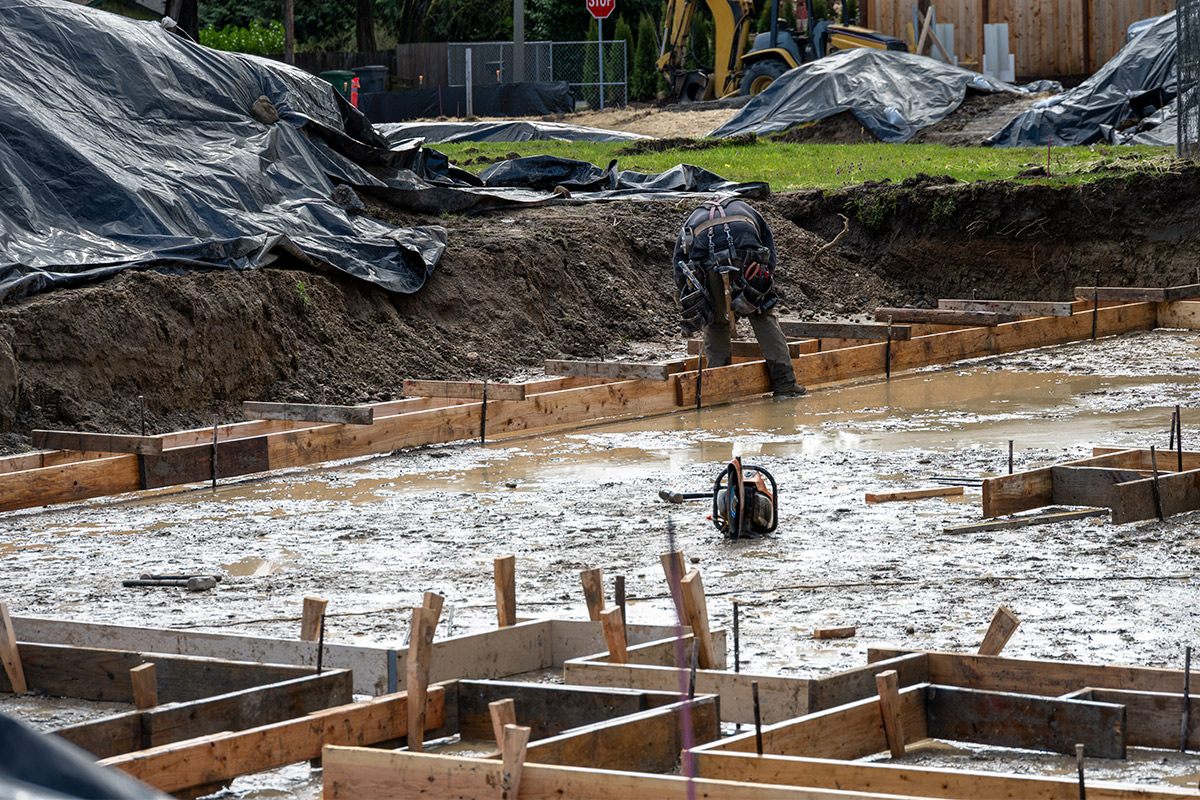
Some schedules treat seasonal weather, agency approvals, utility coordination, and inspections as unpredictable afterthoughts. In South Texas, weather and permitting are known influences and should be scheduled accordingly.
Impact on Project Outcomes
- Delays to weather-sensitive activities
- Rework from ill-timed sequencing
- Extended durations tied to agency and utility reviews
- Loss of credibility with stakeholders
How to Avoid It
External constraints should be planned for, not reacted to. Weather, utility coordination, inspections, and agency approvals are known risks that must be reflected in the schedule.
With deep regional experience, Brownstone Consultants integrates South Texas weather patterns and local approval timelines directly into schedule development and review. We work closely with municipalities, utilities, and regulatory agencies to anticipate review durations and inspection sequencing. This approach allows owners to avoid unrealistic assumptions and maintain forward momentum even when external factors influence progress.
Planning for these realities improves schedule reliability and reduces disruption.
4. Lack of Contingency and Risk Buffers
Schedules without built-in contingency assume nothing will go wrong. Construction always encounters risks, from delivery delays to unexpected site conditions.
Impact on Project Outcomes
- Projects fall behind without options to absorb disruptions
- Claims and change orders increase
- Owners resort to costly acceleration tactics
- Contract disputes arise from unmet milestone expectations
How to Avoid It
Contingency is a strategic tool, not excess padding. Schedules should include risk-based float that reflects critical path sensitivity and known uncertainties.
Brownstone Consultants helps owners identify high-risk activities and evaluate where contingency provides the most value. By tying schedule risk to cost tracking through our Savings Optimization Log (SOL), we document avoided acceleration costs and preserved efficiencies. This gives owners visibility into how proactive planning protects both schedule and budget.
Risk-aware schedules strengthen owner leverage and support better decision-making when issues arise.
5. Inadequate Schedule Monitoring and Control
Many schedules are updated irregularly, rely on percent complete estimates, or lack logic-based progress tracking. When the schedule is inactive, risks go unnoticed until they become crises.
According to a report, only ~12 % of baseline schedules meet high‑quality benchmarks at the start of a project. That number drops to less than 5 % by the time projects reach 75 % completion, indicating that schedule monitoring and control practices are weak or inconsistent as work progresses
Impact on Project Outcomes
- Late identification of issues
- Poor decision-making due to outdated information
- Reduced accountability among team members
- End-of-project surprises that damage trust
How to Avoid It
Schedules only create value when they are actively managed. Avoiding this mistake requires consistent updates, logic-driven progress tracking, and transparent reporting.
Brownstone Consultants implements disciplined schedule review and monitoring processes that go beyond percent complete. We focus on critical path movement, variance analysis, and forward-looking risk identification. Our approach keeps owners informed with clear, consistent communication and actionable insights, allowing issues to be addressed early rather than escalated late.
Active schedule controls turn planning into a tool for accountability and owner advocacy.
How Local Expertise Improves Schedule Reliability

Even when teams follow accepted scheduling best practices, projects in South Texas often experience avoidable delays. The reason is not a lack of effort or expertise. It is the reliance on standardized scheduling approaches that do not fully reflect regional realities.
Here is why location matters and how adapting scheduling strategy to South Texas conditions improves reliability, predictability, and owner outcomes.
1. Regulatory Processes Are Not Uniform Across Jurisdictions
Permitting and inspection timelines vary significantly across South Texas municipalities, counties, and agencies. Some jurisdictions require multiple review cycles or sequential approvals. Others involve coordination with regional authorities or utility providers that operate on limited schedules. Generic schedules often underestimate these timelines, creating early critical path pressure.
As an Owner’s Representative, Brownstone Consultants integrates local regulatory knowledge into schedule development and review. By identifying realistic approval durations and sequencing requirements early, Brownstone helps owners establish defensible schedules that align with how projects are actually approved, not how they are assumed to move.
2. Weather Is a Predictable Planning Input, Not an Exception
Extended heat periods, seasonal rainfall, and sudden storm events are recurring conditions in South Texas. These factors affect productivity, safety, and sequencing for concrete, paving, utilities, and exterior work. Schedules built without accounting for these realities often require rework or costly recovery efforts.
Brownstone incorporates historical weather data and regional experience into schedule reviews, helping owners sequence weather-sensitive activities more effectively. This approach reduces exposure to delay, protects quality, and supports safer job sites.
3. Labor Availability Fluctuates Regionally
Workforce capacity in South Texas is influenced by agricultural cycles, infrastructure demand, and post-storm recovery efforts. Production rates that may be achievable in other regions are not always realistic locally. Schedules that assume consistent labor availability frequently lead to trade stacking and productivity loss.
Brownstone evaluates labor assumptions during schedule review, challenging unrealistic production expectations and helping owners align timelines with achievable workforce conditions. This improves project efficiency and reduces downstream disruption.
4. Community and Stakeholder Constraints Shape Execution
Many public projects in South Texas are delivered within active communities near schools, healthcare facilities, transportation corridors, or residential neighborhoods. School calendars, local events, and access requirements often restrict work hours or require phased construction. Schedules that ignore these constraints can generate stakeholder friction and delay progress.
Brownstone works closely with owners and agencies to incorporate community considerations into schedule planning. This proactive coordination improves stakeholder engagement, maintains public trust, and supports smoother execution.
5. Turning Regional Insight Into Measurable Owner Value
Regional expertise is most effective when it translates into measurable results. By aligning schedules with South Texas realities, owners gain predictability and reduce exposure to delay-driven cost growth.
Brownstone reinforces this approach through disciplined tracking and documentation using its Savings Optimization Log (SOL). Schedule-related efficiencies, avoided acceleration costs, and improved sequencing decisions are documented and communicated clearly. This gives owners visibility into how proactive scheduling protects value throughout the project lifecycle.
Local insight alone is not enough. When combined with data-driven decision making, clear communication, and consistent oversight, it becomes a strategic advantage. This is how scheduling shifts from a planning exercise to a tool for owner advocacy, risk mitigation, and long-term impact.
Take Control of Your Project Schedule with Brownstone Consultants

At Brownstone Consultants, we treat scheduling as a tool for owner control, not a passive document. Our team applies local South Texas expertise, proactive coordination, and data-driven oversight to ensure schedules are realistic, executable, and aligned with long-term objectives. Through our proprietary Savings Optimization Log (SOL), we document real cost efficiencies and provide owners with clear, measurable insight into how scheduling decisions protect project value.
We bring clarity to complexity, keep teams aligned, and advocate for owner interests at every stage of delivery. If your project schedule feels reactive, optimistic, or disconnected from real-world conditions, it is time for a stronger approach.
Partner with a team that uses scheduling to reduce risk, align stakeholders, and deliver projects with confidence and accountability. Check our portfolio to understand the results we have been delivering. Contact us today to learn more.